
SaaS Prediction Market API Website with SEO
Prediction Market API provides unified prediction market data from Polymarket, Kalshi, Novig and more through a single API. Its audience includes developers and businesses building market comparison tools, trading dashboards, research platforms and data-driven applications.
The website project focused on explaining a technical product clearly, establishing visibility for relevant searches and creating a straightforward path from discovering the service to testing the API.
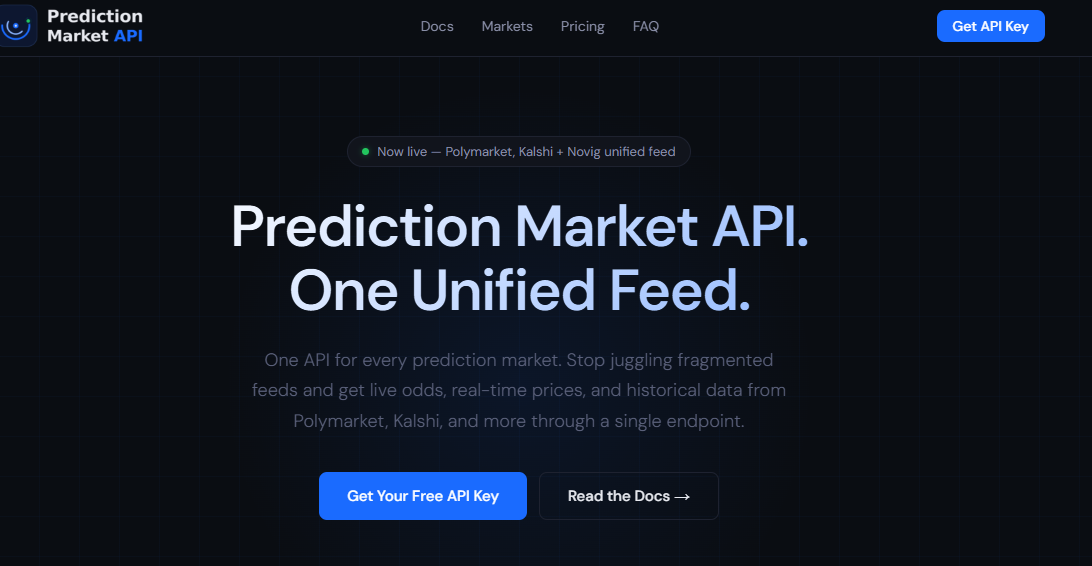
Prediction Market API Website
 Challenges
- Building Search Visibility: Establishing an online presence for a specialist SaaS product and attracting visitors with a genuine need for prediction market data.
- Competing for Relevant Searches: Differentiating the service from direct platform APIs and other data providers.
- Explaining a Technical Product: Communicating the value of one consistent data format across multiple platforms without overwhelming potential customers.
- Reaching a Specialist Audience: Tailoring content to developers, analysts and businesses rather than attracting broad consumer betting traffic.
- Turning Interest into Sign-Ups: Helping visitors understand coverage, access options and integration requirements before they commit.
Strategy and Execution
1. Website Development and SEO Foundations
We developed a website around a clear proposition: access data from multiple prediction market platforms through one integration.
The design connected product information, use cases, pricing and developer resources, helping visitors move from understanding the API to trying it.
- Clear Product Messaging: Explained the practical benefit of a unified feed and consistent response structure.
- Responsive Design: Created an accessible experience across desktop, tablet and mobile.
- Simple Navigation: Made pricing, documentation and key product information easy to find.
- Conversion Opportunities: Used prominent calls to action for obtaining an API key and exploring the documentation.
- Performance Foundations: Optimized page assets and loading behaviour to support usability and search visibility.
2. Keyword Research and Content Strategy
We structured the content strategy around how potential customers search for prediction market data, integration guidance and suitable providers.
Target keyword themes included:
- Core Keywords: “prediction market API,” “prediction market data API” and “prediction market data providers.”
- Platform Keywords: “Polymarket API,” “Kalshi API” and “Novig API.”
- Use-Case Keywords: “prediction market arbitrage API,” “historical prediction market data” and “prediction market API for backtesting.”
- Long-Tail Keywords: “how to integrate prediction market data” and “compare Polymarket and Kalshi prices.”
These themes informed three content areas:
- Educational Guides: Practical explanations of platform APIs, integration requirements and working with market data.
- Comparison Content: Resources helping developers evaluate platforms and data providers.
- Use-Case Pages: Focused landing pages connecting API capabilities with specific projects.
Existing examples include the Polymarket API developer guide, platform comparisons and the Prediction Market Arbitrage API page.
3. On-Page SEO Optimization
We aligned each page with a specific search intent while keeping the content useful to a technical audience.
- Page Titles and Meta Descriptions: Wrote clear descriptions around each page’s primary topic.
- Heading Structure: Organized product benefits, implementation details and common questions into readable sections.
- Internal Linking: Connected educational content with relevant product pages, pricing and documentation.
- Product Examples: Used sample requests and responses to make the integration easier to understand.
- Focused Calls to Action: Gave visitors a relevant next step, such as reading a guide or requesting an API key.
4. Technical SEO Enhancements
Technical work supported reliable crawling, indexing and a smooth browsing experience.
- Crawlability and Indexing: Reviewed robots.txt, XML sitemaps and indexability of key pages.
- Canonical URLs: Checked that search engines could identify the preferred version of each page.
- HTTPS and Mobile Usability: Supported secure access and consistent functionality across devices.
- Page Performance: Reviewed loading speed and Core Web Vitals to identify improvements.
5. Backlink Strategy
Our outreach focused on websites whose audiences were relevant to prediction markets, software development and data infrastructure.
- Editorial Outreach
- Guest Contributions
- Digital PR
The objective was to strengthen search visibility while also reaching potential users through trusted industry sources.
6. Monitoring and Continuous Improvement
We used performance data to refine the website and content strategy.
- Google Search Console: Monitored impressions, clicks, indexing and keyword opportunities.
- Google Analytics: Reviewed traffic sources, landing-page engagement and conversion journeys.
- Conversion Tracking: Measured API-key registrations, trial starts and paid subscriptions where tracking was available.
- Content Updates: Expanded pages based on relevant queries and customer questions.
- Technical Reviews: Checked for broken links, indexing issues and performance changes.
Results
Over a 6-month period the project delivered:
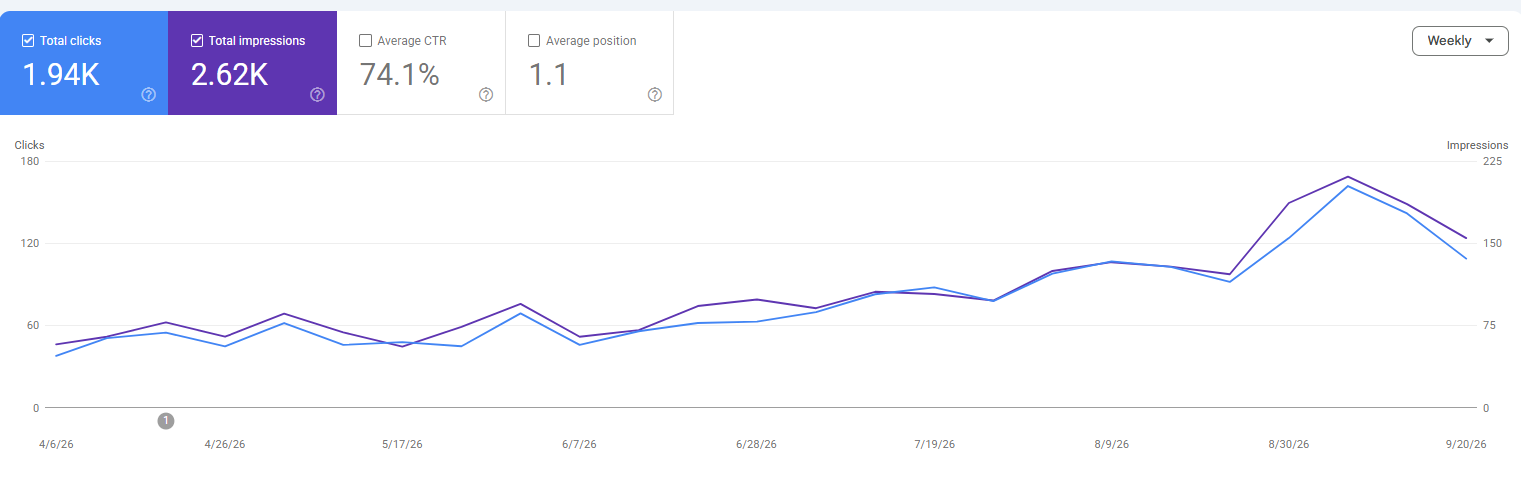
- Organic Traffic: Increased from 10 to 1099 monthly organic visits.
- Search Visibility: Organic impressions grew by 120%, with clicks increasing by 990%
- Keyword Rankings: Achieved average postion of 1.1 for 10 high intent keywords.
- API Sign-Ups: Generated 322 registrations attributed to organic search.
- Paid Customers: Converted 44 organic users into paying subscribers.
- Authority and Links: Earned 56 relevant referring domains, with good DA rating increasing from 5 to 29.
Reporting period: [April 2026–September 2026.]
Prediction Market API Website Traffic
Key Takeaways
- Make the Product Easy to Understand: Clear messaging helps visitors see why a unified API is useful for their project.
- Prioritize Relevant Search Intent: Platform, integration and use-case content can attract visitors who are actively evaluating a solution.
- Connect Education with Conversion: Guides should lead naturally to documentation, pricing and an opportunity to test the API.
- Measure Business Outcomes: API activations, paid customers and revenue provide a fuller picture of SEO performance than traffic alone.
- Keep Improving: Search data and customer feedback help identify the next pages to build and the existing content to strengthen.
The project combined website development, technical SEO and targeted content to position Prediction Market API for organic discovery and customer acquisition.
Details on Prediction Market API
- Website: predictionmarketapi.com
- Location: Austin, Texas, USA.
- Product: Unified prediction market data API.
- Platforms: Polymarket, Kalshi, Novig amd more
- Audience: Developers, analysts and businesses building applications using prediction market data.
- Pricing: View plans.
- Contact: team@predictionmarketapi.com
